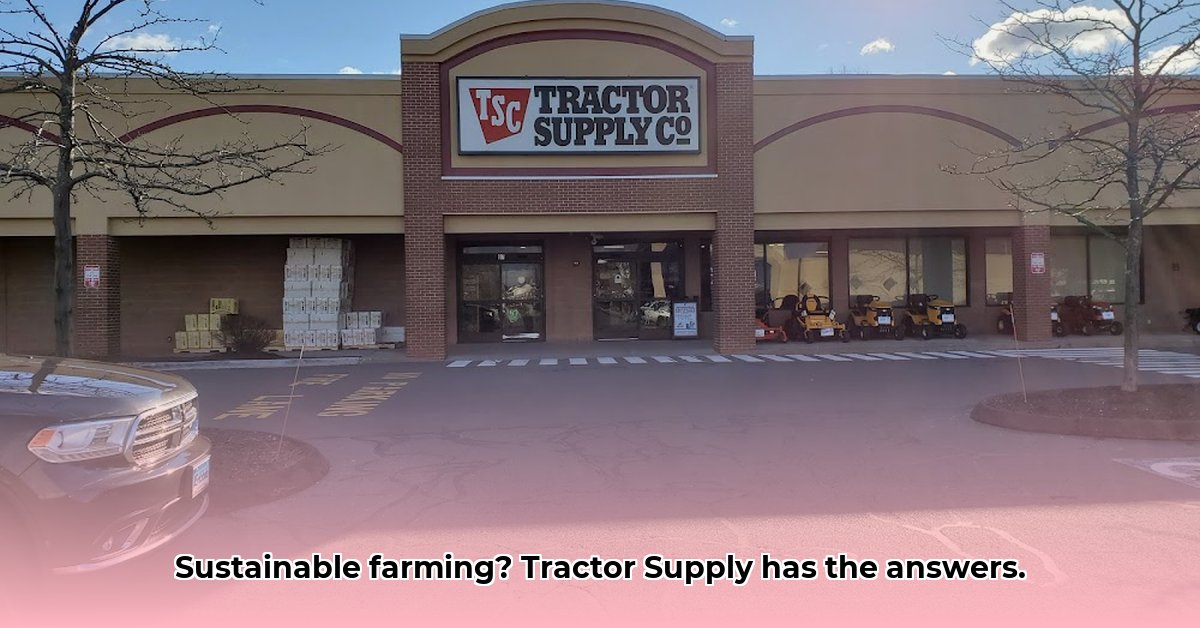
Tractor Supply (TSC) in Bristol, Connecticut, plays a significant role in supporting local agriculture, particularly for those prioritizing sustainable practices. This localized case study explores TSC's contributions, limitations, and the potential for a greener future. We'll examine their product offerings, community engagement, and highlight actionable steps for all stakeholders involved. For examples of sustainable gardening solutions, check out this helpful resource on raised bed planters.
TSC's Product Offerings and Their Contribution to Sustainability
For Bristol's small-scale farmers and home gardeners committed to eco-friendly methods, TSC offers a convenient source for many essential supplies. They stock organic seeds, promoting pesticide-free harvests and healthier ecosystems. Water-efficient irrigation systems help conserve precious resources, a crucial aspect of sustainable agriculture. Ethically sourced livestock feed supports animal welfare, contributing to responsible farming practices. Even seemingly simple items like sustainable fencing materials contribute to better pasture management and reduced environmental impact. These offerings directly support the needs of those striving for sustainable agricultural practices. But, how much of their overall product line reflects these values? That's a crucial question.
Limitations and Challenges: The Need for Greater Transparency
Despite TSC's provision of sustainable products, a comprehensive understanding of their overall environmental impact remains elusive. Crucial data on their supply chains, manufacturing processes, and overall carbon footprint is lacking. This lack of readily available quantitative data hinders a complete assessment of their true sustainability. How can we truly judge their commitment if the environmental impact of their entire operation remains opaque? We need detailed information on their sourcing practices to ensure ethical and sustainable procurement throughout their supply chain. This lack of transparency hampers the ability to fully evaluate TSC's contribution to sustainable agriculture.
Local Impact and Community Engagement: Building Relationships
TSC's engagement with the Bristol farming community goes beyond simple transactions. The knowledgeable staff, often experienced in farming and gardening, provide valuable advice and support to local growers. These informal consultations create a supportive network that fosters collaboration and the sharing of best practices. This human element is a vital part of TSC's role, strengthening the community's pursuit of sustainable practices. However, more formal engagement initiatives could further strengthen this crucial link between retailer and community. What partnerships exist with local organizations already promoting sustainable agriculture?
Actionable Steps for Stakeholders: A Collaborative Approach
To foster a truly sustainable future, several key steps are necessary:
Tractor Supply Company: Conduct a comprehensive life cycle assessment (LCA) to quantify the environmental impact of key product lines, from sourcing to disposal; publicly release a detailed sustainability plan with clear goals, strategies, and progress metrics; prioritize supply chain transparency and ethical sourcing, openly sharing information with consumers.
Small-Scale Farmers and Gardeners: Utilize TSC's sustainable product offerings and engage with staff for advice on improving sustainable practices; provide feedback to TSC on products and suggest additional sustainable options; support and participate in local initiatives promoting sustainable agriculture.
Consumers: Prioritize purchasing certified organic and ethically sourced products; choose products with minimal packaging; demand transparency from companies about their sustainability initiatives and supply chain practices.
Local Governments: Partner with TSC to promote local sustainability initiatives; invest in educational programs promoting sustainable farming and gardening; implement policies incentivizing sustainable farming practices.
Conclusion: Toward a Sustainable Future
Tractor Supply in Bristol holds significant potential to positively influence local sustainable agriculture. However, unlocking this potential requires greater transparency and a collaborative effort from all stakeholders. By demanding better data, supporting sustainable products, and advocating for greener practices, we can collectively help TSC and other businesses become stronger champions of environmentally responsible food systems in Bristol and beyond. Let's work together to build a healthier, more sustainable future.